Joseph Plateau (October 14, 1801 – September 15, 1883) was a Belgian physicist best known as the inventor of the stroboscope.
Born in Brussels, he studied at the University of Liège (Liège), where he graduated as a doctor of physical and mathematical sciences in 1829. In 1835, he was appointed Professor of experimental physics in Ghent University.
The stroboscope is a device that employs bright pulses of light to illuminate a vibrating or rotating object and to make it appear motionless or moving very slowly. The stroboscope works by permitting the eye only a brief glimpse of the object or a portion of it at time intervals that correspond to the object's rate of vibration or rotation. The rate of movement and the light pulses can be adjusted to match.
In 1836, Plateau invented an early stroboscopic device, the "phenakistiscope". It consisted of two disks, one with small equidistant radial windows, through which the viewer could look, and another containing a sequence of images. When the two disks rotated at the correct speed, the synchronization of the windows and the images created an animated effect. The projection of stroboscopic photographs, creating the illusion of motion, eventually led to the development of cinema.
Plateau used a disk with radial slits that he turned while viewing a rotating wheel; when the rotational speed of the disk and the wheel matched exactly, the wheel appeared motionless. Other pioneers employed rotating or vibrating mirrors to produce light pulses. By the later 19th century the camera was being used to capture stroboscopic images for motion studies, and stroboscopic photography has since become the major application for these devices.
Plateau also studied the phenomena of capillary action and surface tension (Statique expérimentale et théorique des liquides soumis aux seules forces moléculaires, 1873). The mathematical problem of existence of a minimal surface with a given boundary is named for him. He conducted extensive studies of soap films and formulated Plateau's laws which describe the structures formed by such films in foams.
Fascinated by the persistence of luminous impressions on the retina, he performed an experiment in which he gazed directly into the sun for 25 seconds. Consequently, he lost his eyesight later in his life. He died in Ghent.
The modern stroboscope, an electronic device, was brought to perfection in 1931 by the American scientist Harold Edgerton. Such devices can produce flashes equivalent to 50,000 watts of incandescent light. A typical flash lasts roughly five millionths of a second, and 100 such flashes may be produced each second. Stroboscopes are commonly available for setting the ignition timing of motor vehicle engines. They are also used industrially when moving machines must be checked for quality, and in the laboratory for studying mechanical systems in motion. Simple stroboscopes are sometimes used for stage-lighting effects.



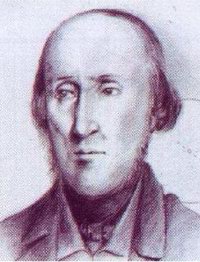 Joseph Plateau (October 14, 1801 – September 15, 1883) was a Belgian physicist best known as the inventor of the stroboscope.